

Test Track
Opens your browser's print window, where you can also save this guide as a PDF.
Overview
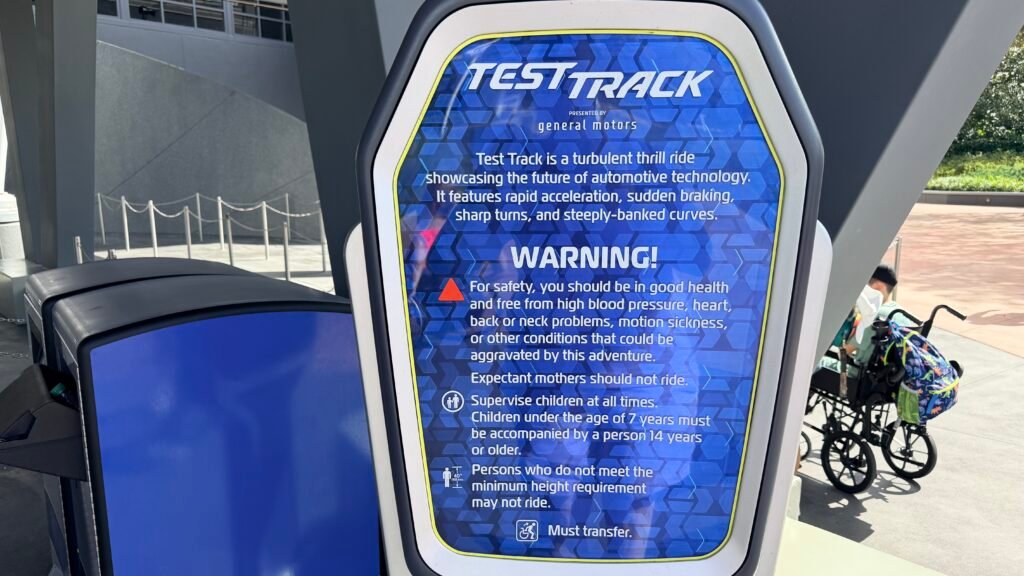
Test Track is a high-speed ride in EPCOT’s World Discovery that explores ideas around modern transport and future mobility.
You board an open-topped test vehicle and travel through a series of indoor environments before heading outside for the attraction’s high-speed finale.
The indoor portion includes acceleration, braking, changes in direction and banked turns. The final outdoor section is the most intense part, with the vehicle accelerating to highway speeds around the outside of the building.
There are no inversions or major drops, but the combination of speed, sudden acceleration and sharp changes in direction makes this one of EPCOT’s more physically intense attractions.
Queue Details
The queue is mostly indoors and uses the standard attraction entrance.
Wheelchair and ECV users can remain in their mobility device through the queue until the boarding area.
The route is step-free, with wide indoor pathways and gradual changes in level.
Closer to boarding, guests are divided into groups before entering the load station.
If the physical transfer into the vehicle is something you are unsure about, a stationary practice vehicle is available outside the main entrance, allowing you to try the boarding movement before joining the full queue.
Transfer Info
Wheelchair and ECV users must transfer completely into the Test Track vehicle.
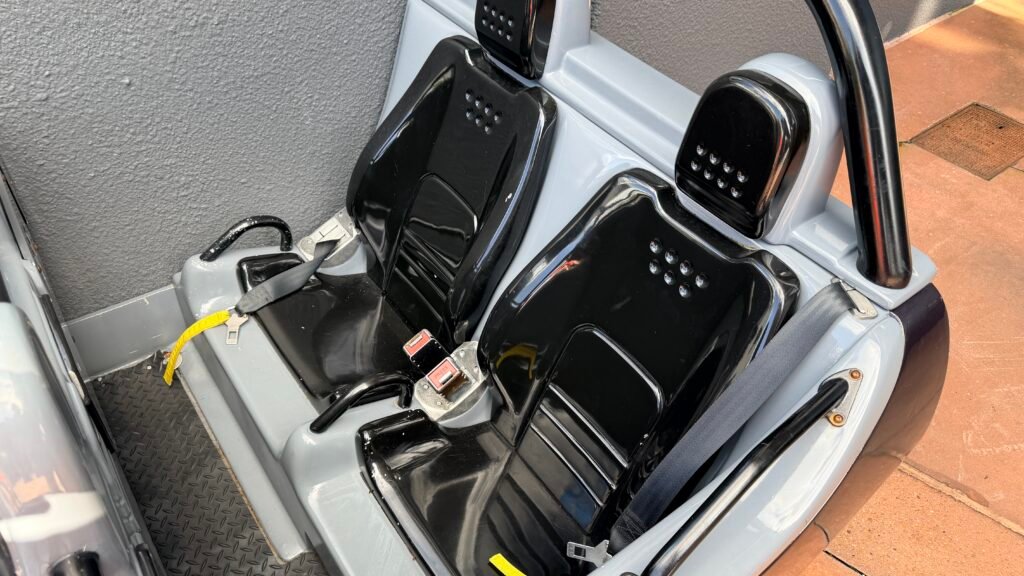
The ride vehicles have two rows of three individual seats and sit fairly low relative to the loading platform.
Boarding involves stepping over the side of the vehicle and lowering yourself into the seat, so both the height of the side wall and the depth of the seating position can affect how manageable the transfer feels.
A stationary practice vehicle is available outside the attraction entrance, allowing you to try the boarding movement before joining the full queue.
There are also additional transfer aids available at the ride vehicle itself.
A booster seat can be added to the ride seat to raise the seating position. This reduces how far you need to lower yourself into the vehicle and can also make getting back out easier.
A removable grab bar hand rail can also be fitted inside the vehicle to provide something solid to hold while transferring in or out.
These aids can be used to make the transfer more manageable, but you still need to move completely from your wheelchair or ECV into the ride seat before riding.
If you think the booster seat or grab bar would help, tell a Cast Member before boarding so they can prepare the appropriate setup.
If physical assistance is needed during the transfer, that assistance needs to come from somebody in your own party.
Once seated, you use the vehicle’s seatbelt restraint for the ride.
Your wheelchair or ECV is moved to the unload side and is available again when you leave the vehicle.
Sensory Experience
What do these sensory tags mean?
- Sudden Movement
- The ride vehicle, seat or platform makes abrupt starts, stops, jolts or changes of direction.
- Vibration
- Noticeable shaking or vibration is deliberately transmitted through the seat, platform or vehicle.
Sensory experiences vary between people. These tags describe elements that may be present, not how strongly any individual guest will experience them.
Test Track combines slower indoor movement with a much faster outdoor section.
Inside, the vehicle accelerates and brakes repeatedly, changes direction suddenly and travels through banked turns.
The scenery and lighting change as you move through the different environments, with periods of lower lighting and bright illuminated displays.
The most intense transition comes when the vehicle reaches the outdoor speed section.
The car accelerates rapidly onto the exposed track and reaches around 65 mph, with strong wind, sustained speed and a heavily banked turn around the building.
Because the vehicle is open-topped, the wind and surrounding noise are much more noticeable than on an enclosed dark ride.
There are loud vehicle sounds, sudden acceleration and braking, and strong lateral forces during some of the turns.
The outdoor section also exposes you directly to the weather, so heat, cold and wind can change how the experience feels.
Practical Tips
If the transfer is uncertain, use the stationary practice vehicle before joining the queue. It gives you a realistic way to try stepping over the side, lowering into the low seat and getting back out again.
The downward movement into the vehicle is worth considering separately from the initial step over the side. Getting back out also requires pushing yourself upwards from the low bucket seat.
Wheelchair and ECV users can remain in their mobility device through the queue, so there is no need to change to a park wheelchair just to reach the loading area.
If high speed is the main concern, most of the indoor portion is much slower. The dramatic increase in intensity comes near the end when the vehicle accelerates onto the outdoor track.
Test Track is partly outdoors and may pause operations during poor weather, particularly thunderstorms.
After spending most of the attraction discussing the future of transportation, Test Track concludes that the most important technological breakthrough remains “go faster.”
Attraction Gallery



Spotted something we should update?
Theme parks change, and sometimes you’ll know something we don’t. If you’ve noticed something that’s changed, spotted something we’ve got wrong, or have useful information we should add, let us know.
Send us an update →