
Jumping Junction
Opens your browser's print window, where you can also save this guide as a PDF.
Overview
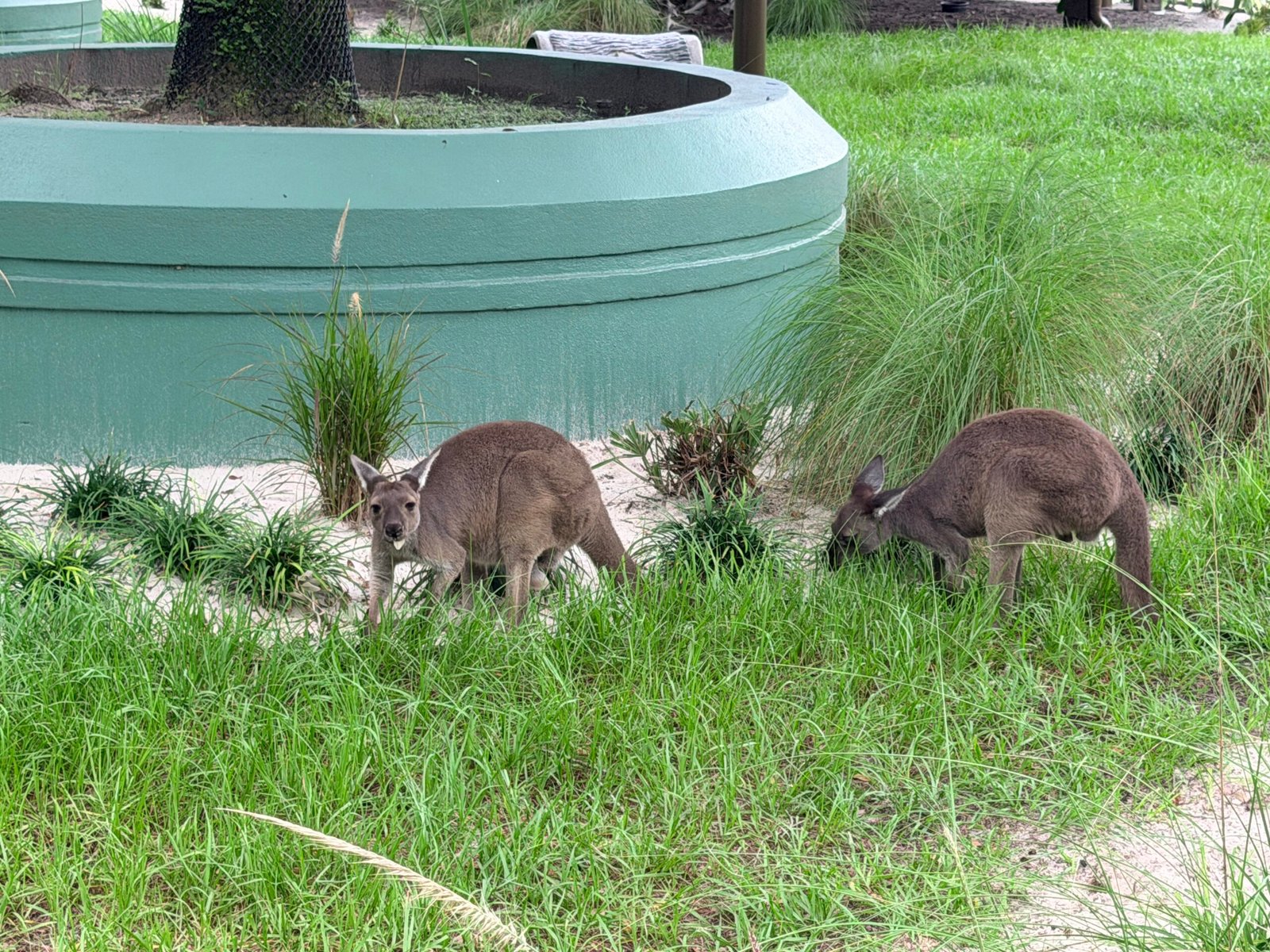
Jumping Junction is an Australian wildlife experience at Conservation Station featuring kangaroos and wallabies.
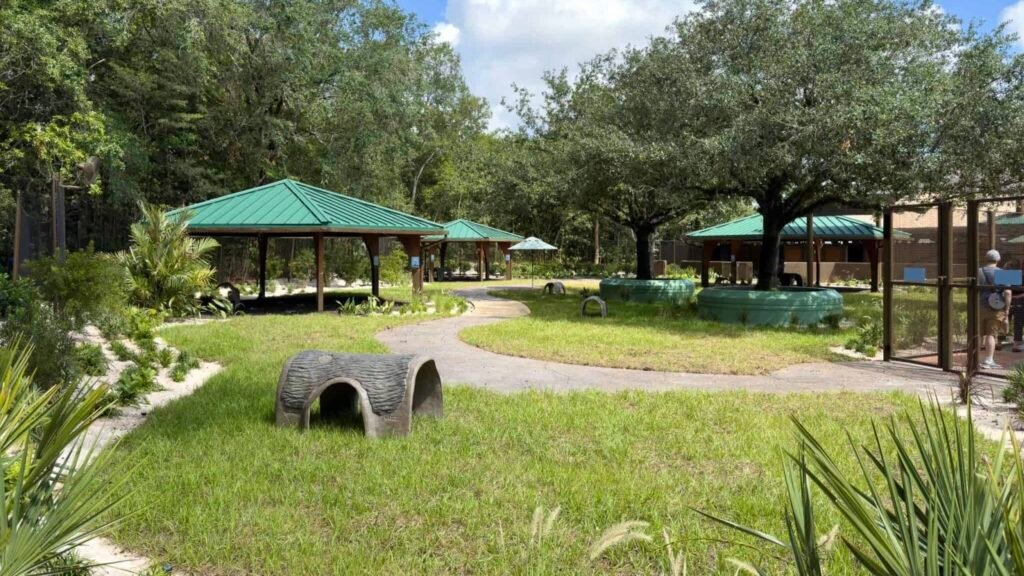
Rather than being a conventional animal enclosure viewed from outside, the experience lets you walk through the habitat area at your own pace.
Disney’s animal-care team may be on hand to talk about the animals, their behaviour and the differences between kangaroos and wallabies, but you do not need to join a guided tour to experience the area.
Because the animals are living rather than performing, what you see will vary depending on where they are, how active they are and the time of day.
The experience sits alongside Bluey’s Wild World and the other animal-care activities at Conservation Station.
Queue Details
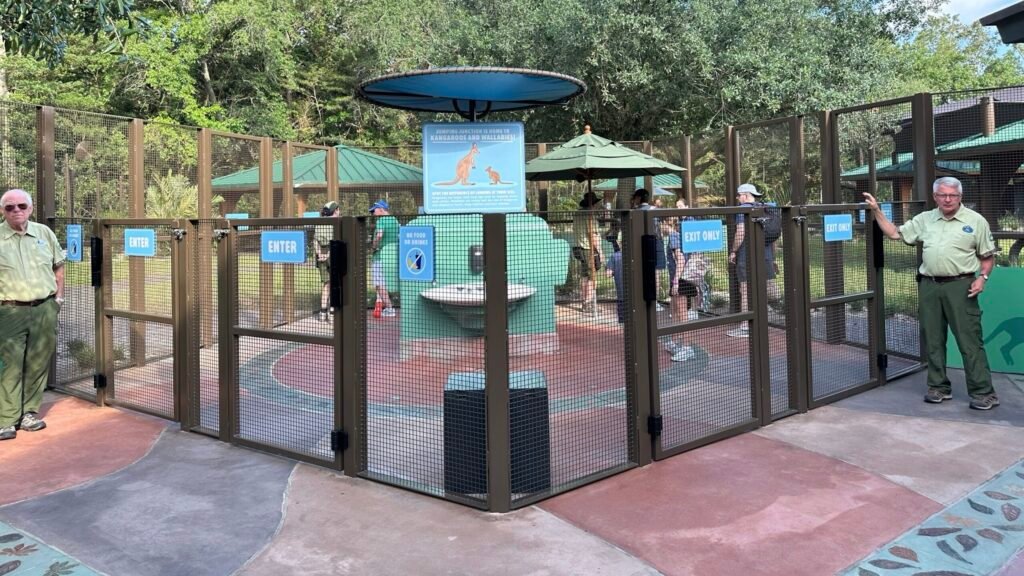
There is no conventional queue.
Guests reach Jumping Junction at Conservation Station after travelling there on the Wildlife Express Train from Harambe.
From the train station, the path to Conservation Station slopes downhill, which means the return journey back to the train is uphill.
The experience is fully outdoors and follows a flat, step-free path through the animal-viewing area.
Wheelchair and ECV users can remain in their mobility device throughout.
You can move through the area at your own pace, stopping to watch the animals or speak to the animal-care team if they are available.
Because the pathway is completely outdoors, heat, humidity, rain and direct sun can all affect how comfortable the experience feels.
Transfer Info
No transfer is required.
Wheelchair, ECV and powered-mobility-device users can remain in their mobility device throughout the walkthrough.
There is no ride vehicle, restraint, boarding step or fixed seating.
The viewing route is accessible from the main path, so you do not need to leave your mobility device to see the kangaroos and wallabies.
Because this is a self-guided walkthrough rather than a fixed viewing platform, you can move through the area at your own pace and adjust your position as needed.

Sensory Experience
What do these sensory tags mean?
- Scents
- Noticeable artificial or environmental scents are part of the experience.
Sensory experiences vary between people. These tags describe elements that may be present, not how strongly any individual guest will experience them.
Jumping Junction is generally a calm animal experience, but it is still an outdoor wildlife environment.
You may hear animal sounds, Cast Member commentary and other guests talking as the group moves through the area.
The animals can move suddenly or approach different parts of the habitat without warning, so what is happening around you can change quickly.
There are natural outdoor smells from vegetation, soil and the animal habitat.
The space is visually open and naturally lit, although shade levels vary.
There are no theatrical lighting effects, loud show effects, ride movement or restraints.
Crowd levels can change depending on how many guests arrive from the train or Bluey’s Wild World at the same time.
Practical Tips
Jumping Junction can only be reached via the Wildlife Express Train, so allow time for the journey out to Conservation Station and the return trip afterwards.
Because the animals are free to move around their habitat, don’t assume a quiet first glance means there is nothing to see. It can be worth pausing for a few minutes and watching where the animals move.
If animal-care Cast Members are available, they are worth speaking to. They can point out behaviours and differences between the species that are easy to miss when you are simply looking at them.
The entire experience is outdoors, so weather and direct sun can make a noticeable difference to how comfortable it feels.
Disney has somehow managed to make “look at a kangaroo” into a themed attraction. To be fair, kangaroos are doing most of the heavy lifting.
Attraction Gallery
Spotted something we should update?
Theme parks change, and sometimes you’ll know something we don’t. If you’ve noticed something that’s changed, spotted something we’ve got wrong, or have useful information we should add, let us know.
Send us an update →