
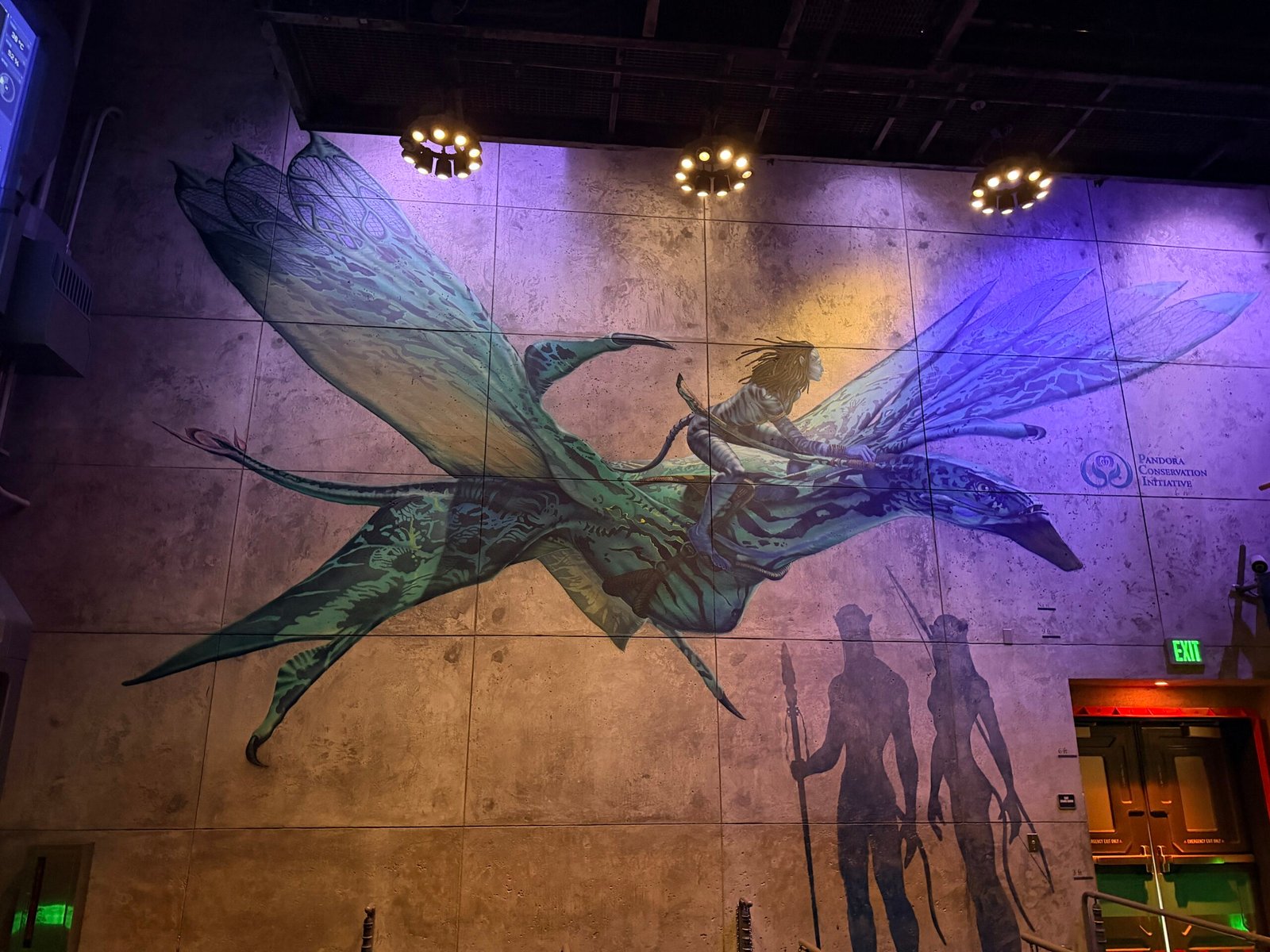
Avatar Flight of Passage
Opens your browser's print window, where you can also save this guide as a PDF.
Overview
Avatar Flight of Passage is an immersive 3D flying simulator that lets you experience a flight across Pandora on the back of a mountain banshee.
Rather than sitting in a conventional simulator seat, each rider uses an individual motorcycle-style “link chair”. You lean forwards into the front of the vehicle while padded restraints secure your back and lower legs. Once connected to your avatar, the combination of a huge 3D image, movement, wind, water, scents and other physical effects creates the sensation of flying through Pandora.
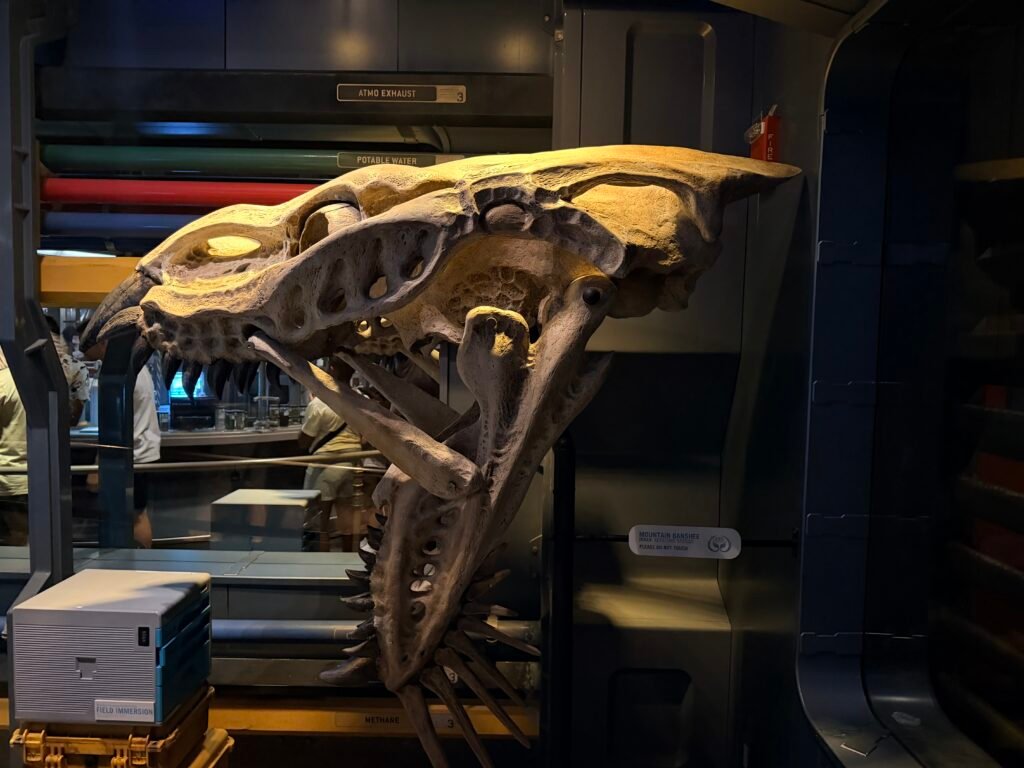
The ride follows your banshee over mountains, through forests and caves and down towards the water, with several sequences designed to feel as though you are diving or falling even though these are simulated rather than coaster-style drops.
One of the attraction’s cleverest effects is much smaller: the section beneath you gently expands and contracts, mimicking the feeling of the banshee breathing between your legs.
Queue Details
Flight of Passage has one of Walt Disney World’s most elaborate queues, but it is also long, winding and contains substantial changes in gradient.
The first part of the standby queue is outdoors and climbs uphill through Pandora. The incline is noticeable, particularly if you are self-propelling a wheelchair, and the route winds back and forth as it climbs.
The queue then moves indoors, where it is cooler but continues uphill for a while before eventually becoming flatter.
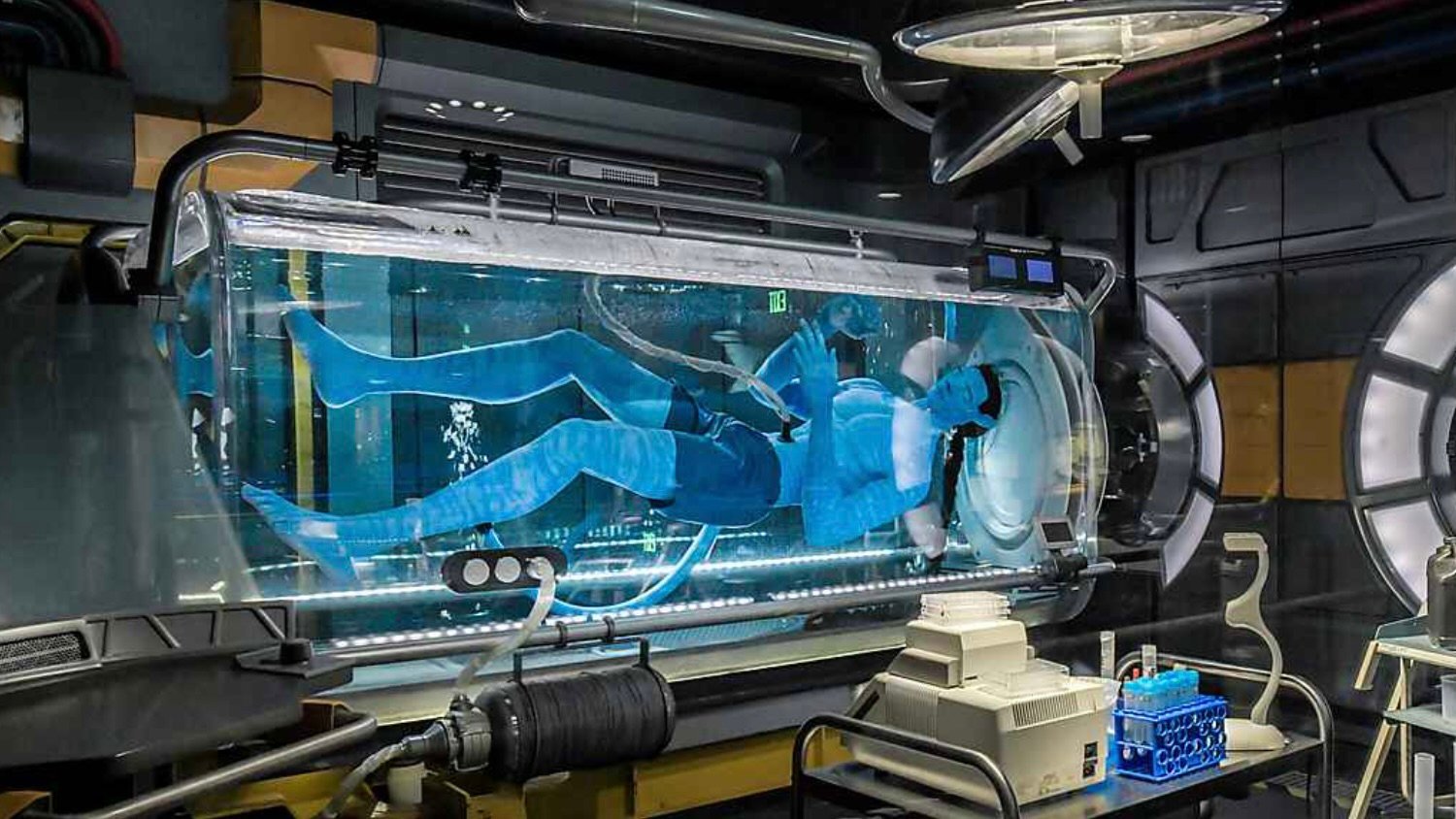
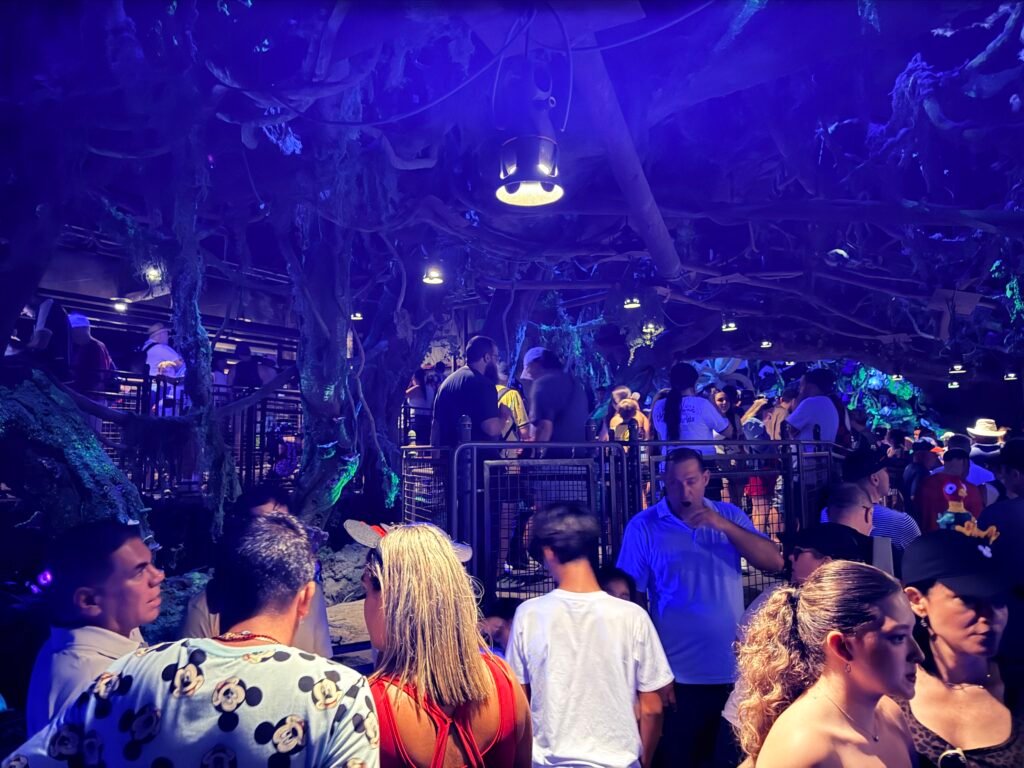
A later section becomes considerably darker as the route moves deeper into the laboratory areas. There are some further gentle uphill sections here, and restrooms are available within this part of the queue.
Some areas use strong backlighting and coloured lighting effects, so clothing and other materials may appear differently under the lighting.
There is no separate or flatter wheelchair entrance that bypasses the main queue. Wheelchair users follow the same general route, so the gradients are worth knowing about before joining.
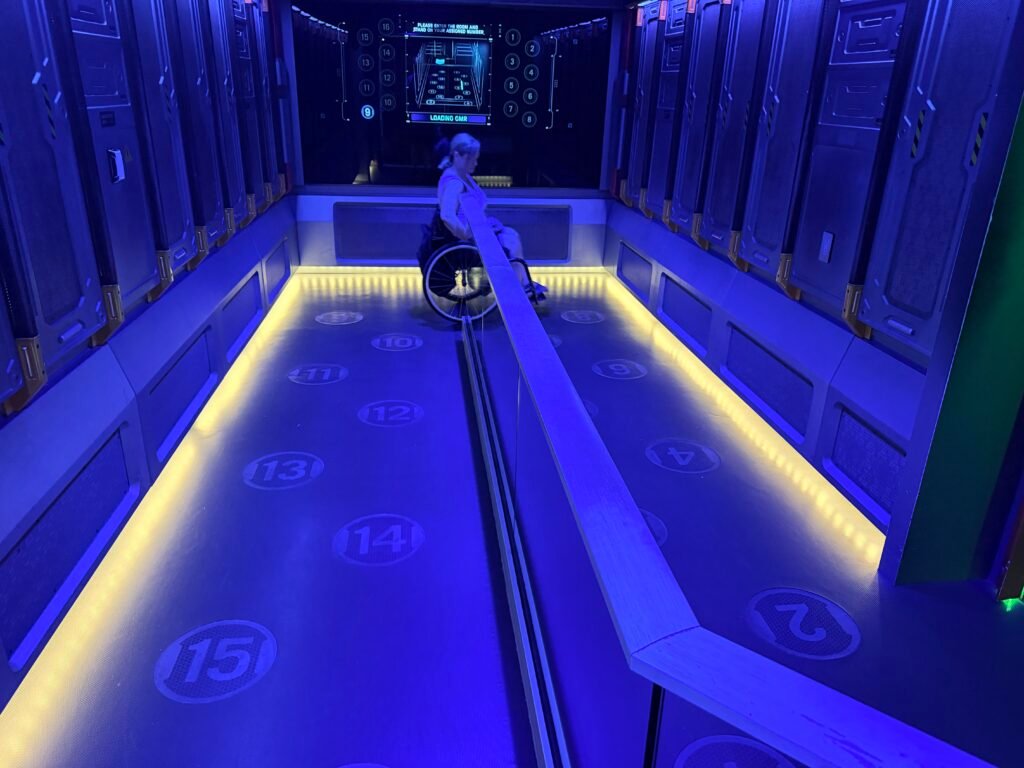
Once you reach the loading area, guests are divided between several ride chambers. Four loading lanes slope uphill and three slope downhill.
Guests then enter two pre-show rooms before boarding. The first “link chamber” holds around 16 guests and lasts approximately four minutes, with flashing or changing lights and bursts of air as part of the linking sequence.
The second pre-show lasts around two minutes and continues the Avatar-linking story before you enter the ride chamber.
3D glasses are issued before boarding.
If you are using Lightning Lane, you will bypass a significant part of the main standby queue, including some of its most detailed laboratory theming.
Transfer Info
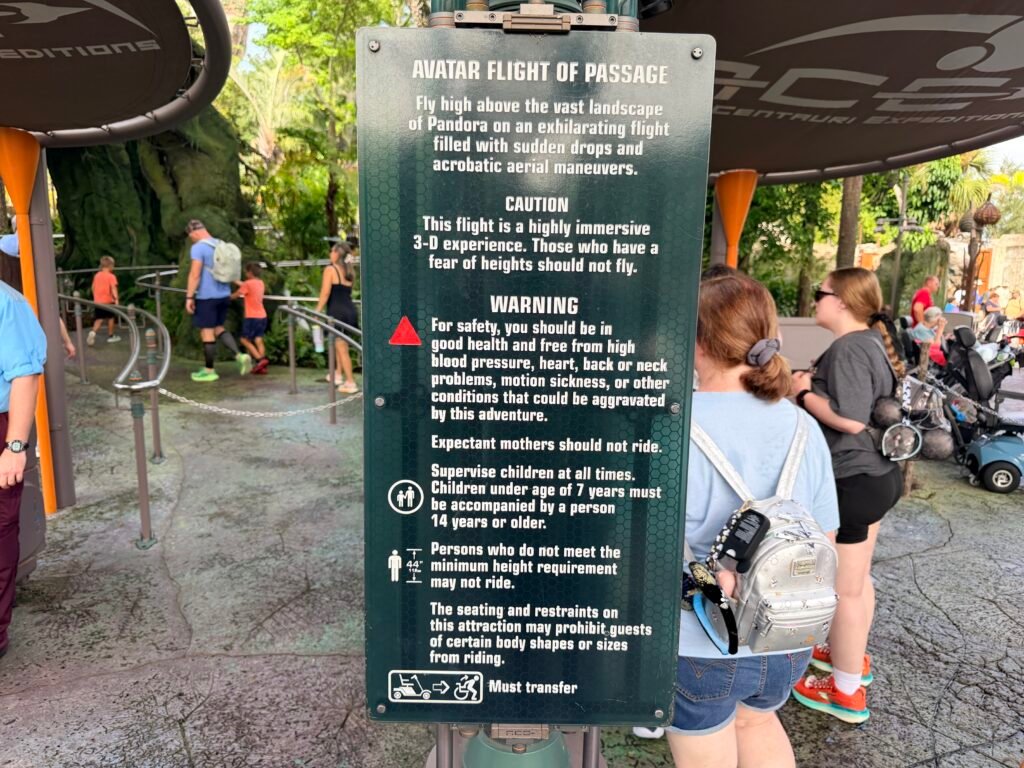
All guests must transfer from their wheelchair or ECV onto an individual Link Chair.
Wheelchair users can remain in their own wheelchair until they reach the ride chamber and can position it close behind the Link Chair for the transfer.
The Link Chair is approached from behind. You move forwards onto a narrow motorcycle-style seat and settle into a straddled position with your feet placed on either side.
An attraction-specific transfer wheelchair is available for guests who would find transferring directly from their own wheelchair difficult.
The transfer wheelchair has an open section at the front so it can be positioned closer to the Link Chair. It can also be raised to bring you closer to the height of the ride seat, reducing the height difference during the transfer.
You first transfer from your own wheelchair into the transfer chair, which is then positioned behind the Link Chair. From there, you can slide or move forwards onto the ride seat rather than having to negotiate a larger gap during the transfer.
If you would prefer to make the first transfer somewhere more private, ask a Cast Member what arrangements are available before reaching the ride chamber.
Once seated, you lean forwards against the padded front section. A padded restraint secures your back and separate restraints close behind your lower legs.
All restraints must reach their required locked positions before you can ride. Fit can be affected by height, leg length, calf size, body shape and the position you are able to maintain, rather than simply overall weight or waist size.
A test Link Chair is available outside the attraction. If you are unsure about the seating position, restraint fit or transfer, trying this before joining the queue can give you a much clearer idea of what boarding involves.
Guests using an ECV who cannot walk through the later parts of the attraction will need to transfer to a wheelchair before continuing towards the ride chamber.
Your wheelchair is moved away from the immediate boarding position while you ride and returned afterwards so you can transfer back out of the Link Chair.
If you are assigned to one of the upper loading bays, the normal exit route may involve steps. Tell a Cast Member before boarding if you need a step-free exit so they can direct you appropriately.
The exit route also includes a fairly steep ramp.
Cast Members can explain the equipment and position the wheelchair, but any physical lifting or bodily assistance needs to come from someone in your own party.
Sensory Experience
What do these sensory tags mean?
- 3D
- 3D glasses or stereoscopic screen effects are part of the experience.
- Darkness
- Substantial parts of the experience take place in darkness or very low light.
- Flashing Lights
- Flashing, strobing or rapidly pulsing light effects are used.
- Motion Simulator
- A moving seat or platform is synchronised with filmed or projected motion.
- Scents
- Noticeable artificial or environmental scents are part of the experience.
- Sudden Movement
- The ride vehicle, seat or platform makes abrupt starts, stops, jolts or changes of direction.
- Vibration
- Noticeable shaking or vibration is deliberately transmitted through the seat, platform or vehicle.
- Water
- Guests may encounter splashes, sprays, mist or other water effects.
- Wind/Air Effects
- Deliberate blasts of air or wind effects can be felt by guests.
Sensory experiences vary between people. These tags describe elements that may be present, not how strongly any individual guest will experience them.
Flight of Passage is a highly immersive 3D motion simulator where the screen, ride movement and physical effects all work together to create the sensation of flying.
You wear 3D glasses and face a large screen that fills much of your field of view. The imagery moves quickly through Pandora, including climbs, dives and sequences close to the ground and water. Although there are no physical roller-coaster drops, the combination of the screen and Link Chair movement can create a very convincing sensation of falling or diving.
The Link Chair moves forwards, backwards and from side to side in coordination with the film. The physical movement is generally smooth, but the visual motion can make relatively small movements feel much larger.
Air moves across you during parts of the flight, and there are small water or mist effects during some scenes. Scents are also used at different points as you travel through Pandora.
The seat itself provides another physical sensation. The section between your legs gently expands and contracts at quieter moments to mimic the banshee breathing beneath you.
The restraint system can also be a sensory consideration. Your back is held against the padded front of the Link Chair while separate restraints secure the backs of your lower legs. The pressure around the back and calves, and having limited movement once restrained, may be significant for some guests.
The experience begins before you board. Parts of the indoor queue are fairly dark and use strong coloured and backlighting effects.
The first pre-show takes place with a group of around 16 guests and lasts approximately four minutes. It includes flashing or changing lights, scanning effects and noticeable bursts of air from above. A second pre-show lasts around two minutes before you enter the ride chamber.
Once the main flight begins, the combination of 3D imagery, simulator movement and physical effects can make the experience feel much more intense than the actual movement of the Link Chair alone.
Motion sickness may be a consideration, particularly for guests who are sensitive to fast-moving 3D imagery or the sensation of simulated flight.
Practical Tips
Try the test seat if you have any doubts about the restraint or seating position. Flight of Passage’s leg-and-back restraint system is unusual, and whether it fits comfortably can depend on body proportions and positioning rather than simply clothing size or weight.
The test seat is useful even if fit is not your concern. It gives you a much better idea of the straddled seating position and how far forwards you need to lean before committing to the queue.
If standing still for several minutes is difficult, mention this to a Cast Member before reaching the pre-shows. Both involve standing on assigned floor positions while the linking sequences run.
For wheelchair users who self-propel, do not underestimate the queue itself. The outdoor and early indoor sections contain sustained uphill gradients, and there is no separate wheelchair route that avoids them.
If steps are a problem, tell a Cast Member before boarding. Some upper loading bays normally exit via steps, and they can direct you to an appropriate step-free route.
If visual motion causes problems, removing the 3D glasses or closing your eyes will reduce the visual flying effect, but the simulator movement, restraint pressure, air and other physical effects will continue.
There are storage compartments behind the ride vehicles for loose belongings. Bags cannot simply be left beside the Link Chair because the ride system and surrounding platform move during the attraction.
If you are choosing between standby and Lightning Lane, there is a genuine trade-off: Lightning Lane can save a substantial amount of time, but the full standby route contains some of Disney’s best queue design. If you have never seen it before and the gradients are manageable for you, the standby queue is worth experiencing at least once.
Pandora may be technologically advanced, but apparently even interplanetary tourism still begins with deciding whether the queue is worth it.
Attraction Gallery







Spotted something we should update?
Theme parks change, and sometimes you’ll know something we don’t. If you’ve noticed something that’s changed, spotted something we’ve got wrong, or have useful information we should add, let us know.
Send us an update →